Showing posts with label Dhanesh Raj. Show all posts

Monday, May 4, 2020

How I React When Facing Problems / Difficulties?

MY REACTON WHEN FACING PROBLEMS.


SOURCE : GOOGLE IMAGE

     All of us face various types of problems and difficulties in our lives. It could be from a wide array of perspectives such as wealth, health and other similar issues. What's important is how do we respond to each and every problem and respond to them when they strike us hard! Some people are really good at solving problems while others find it harder to tackle their shortcomings. Likewise, in my case, when problems hit me hard, I found it very difficult to overcome them.
7 Things To Remember When Facing A Giant - Life Palette
SOURCE : GOOGLE IMAGE

      One I could vividly remember was when I was 16, while I was studying in Form 4 to be precise. At that time of my life, my family and I faced difficulties one after another. It was when the hospital reports showed that my dear sister had to undergo surgeries due to brain tumour. From then, expenses overloaded us, happiness and peace was never to be seen in my family for almost 3 years. Our family faced terrible economic breakdown. As for me, I had to juggle between studies and other family duties. Believe me, it as easy to digest the fact that my dear sister was diagnosed with deadly sickness and I, on the other had to keep myself focused in the upcoming SPM exams!

10 Ways to Tackle Common Project Management Challenges Like a Pro
SOURCE : GOOGLE IMAGE

   After all the toiling and hardwork, I was relieved to finally sit for SPM. I couldn't say but I was all prepared but I know that I gave my best. My sister's condition got better and my parents were slowly but steadily regaining their financial strength. Though we were in the midst of tremendous pressure, my parents never failed to fulfil their vows to provide me with the best education possible. Simply, they were my pillars of support when I was very down and their 
positive and bold outer appreance gave me the push to give my best too.


Pain Points: How to Find and Solve Your Customers' Problems
SOURCE : GOOGLE IMAGE


    After receiving the SPM results, I had to make a vital decision on continuing my tertiary studies. Though many well-wishing friends and family members advised me to enrol a college or a university, I was ever determined to achieve my dream of becoming a sailor. Thus, I joined ALAM ( MALAYSIAN MARITIME ACADEMY)  as a self-paid student. Well, here comes another obstacle in my life. A self-paid student is no easy. After all the wave-like financial issues that we faced recently, here came another problem that I had to deal with. Thanks to God, with the timely help of my parents and my batchmates, I managed to get by with this financial issue with regard to the fees of my course without jeopardising the studies of my other siblings.


Love Your Life: Face your problems
SOURCE : GOOGLE IMAGE


    Frankly, even after completing some part of the course, in order for me to get the 12-month seatime experience, I had to initiate and find a ship to complete my needed practical all by myself. From here, I was convinced to believe that the life of a self-paid cadet is not same as a sponsored cadet. Initially, I was rejected by many companies when I applied for my cadetship. Eventually, after 4 months of waiting, I was selected by a company to complete my 12-month seatime.
Trust God when facing dif... | Quotes & Writings by Anas Ansari ...
SOURCE : GOOGLE IMAGE

       All these hardships in my life made me stronger. I was ever ready to leave my family and embark on a journey of a year in the sea. I was fully aware of the setbacks that I would face such as the inability to contact my family members, festives to go by without my family but I was ever prepared and I could overcome these problems in due time. However, unbeknown to me that I would face another difficulty in the ship itself. It was regarding the members of the crew. I was the only Malaysian among the crews of the ship! There was the communication problem among us as English is not used as the shipboard language to both receive and revert commands. My willpower was strong. Amongst the added pressure, I kept my very eyes on the prize! The 12 months flew by in split seconds and I survived as a cadet. To put them in the correct perspective, I was not just cadet, but an independent and responsible cadet.

SOURCE : GOOGLE IMAGE

     After all these precious life altering lessons that lingered for 12 months, I am finally back at ALAM for my final year. Hopefully, I will again get my COC and bring up the achor of experiences in setting the sail for another adventure.


    So guys, always remember that life is a combination of happy moments and difficult situations. Sometimes you feel excited, and other times you feel like the world is falling down on top of you. Although it’s our natural tendency to seek happiness, it’s actually difficult situations that test us and make us grow.

Thursday, March 26, 2020

GLOBAL MARITIME REGULATORY SYSTEM

GLOBAL MARITIME REGULATORY SYSTEM

The global maritime regulatory system consists of four main pillars such as Maritime labour convention (MLC),International convention on standards of training,certification and watchkeeping for seafarers (STCW), MARPOL 73/78 and International convention for safety of life at sea (SOLAS).These four pillars are under one roof organization called the International Maritime Organization (IMO), which is the London based United Nations agency responsible for the safety of life at sea and the protection of the marine environment.

imo-2020-and-the-rocky-road-to-full-compliance_77631.png
SOURCE : GOOGLE IMAGE

1) Maritime labour convention (MLC)

The Maritime Labour Convention 2006 (MLC) is an international agreement of the International Labour Organisation (‘ILO’) which sets out seafarers’ rights to decent conditions of work.  It is sometimes called the ‘Seafarers’ Bill of Rights’.  It applies to all seafarers, including those with jobs in hotel and other passenger services on cruise ships and commercial yachts.The convention entered into force on 20 August 2013, one year after registering 30 ratifications of countries representing over 33 per cent of the world gross tonnage of ships.Although the Convention has not been ratified worldwide, it has widespread effect because vessels from non-signatory states that attempt to enter ports of signatory states may face arrest and penalties for non-compliance with the MLC.

Image result for marine labour convention
SOURCE : GOOGLE IMAGE


2) MARPOL 73/78

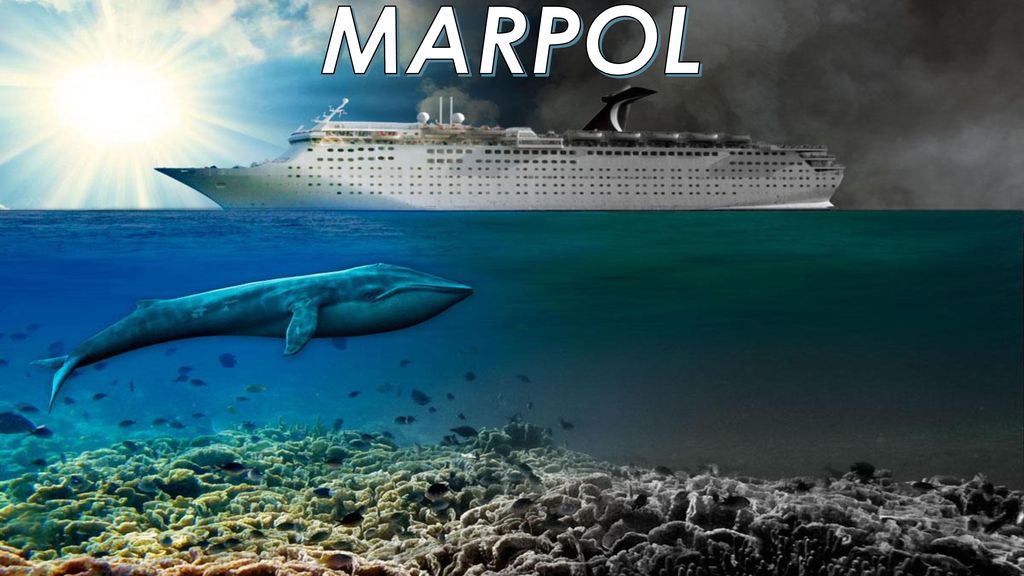
The International Convention for the Prevention of Pollution from Ships, 1973, as modified by the Protocol of 1978 (MARPOL 73/78), was promoted by the International Maritime Organization (IMO) to prohibit all ships from discharging wastes at sea which could result in pollution of the marine environment.The original MARPOL was signed on 17 February 1973, but did not come into force at the signing date. The current convention is a combination of 1973 Convention and the 1978 Protocol, which entered into force on 2 October 1983. MARPOL 73/78 applies to oil tankers, cruise ships, general cargo and container vessels, tugs, ferries, yachts and small pleasure craft. The objective of the convention is to reduce the volumes of harmful materials entering the world's ocean and the marine environment. The technical requirements of MARPOL are included in six separate Annexes which came into force in May 2005:
  • Annex I—Regulations for the Prevention of Pollution by Oil
  • Annex II—Regulations for the Control of Pollution by Noxious Liquid Substances in Bulk
  • Annex III—Prevention of Pollution by Harmful Substances Carried in Sea in Packaged Form
  • Annex IV—Prevention of Pollution by Sewage from Ships
  • Annex V—Prevention of Pollution by Garbage from Ships
  • Annex VI—Prevention of Air Pollution from Ships

Image result for marpol
SOURCE : GOOGLE IMAGE


3)International convention on standards of training,certification and watchkeeping for seafarers (STCW)

International Convention on Standards of Training, Certification and Watchkeeping for Seafarers, 1978 was adopted on 7 July 1978 and entered into force on 28 April 1984. The main purpose of the Convention is to promote safety of life and property at sea and the protection of the marine environment by establishing in common agreement international standards of training, certification and watchkeeping for seafarers.

SOURCE : GOOGLE  IMAGE

4)  International convention for safety of life at sea (SOLAS)

 The SOLAS Convention in its successive forms is generally regarded as the most important of all international treaties concerning the safety of merchant ships. The first version was adopted in 1914, in response to the Titanic disaster, the second in 1929, the third in 1948, and the fourth in 1960. The 1974 version includes the tacit acceptance procedure - which provides that an amendment shall enter into force on a specified date unless, before that date, objections to the amendment are received from an agreed number of Parties.

Image result for Internationl convention for safety of life at sea (SOLAS)
SOURCE : GOOGLE IMAGE

Tuesday, March 3, 2020

MY IDOL

THE PERSON I ADMIRE THE MOST


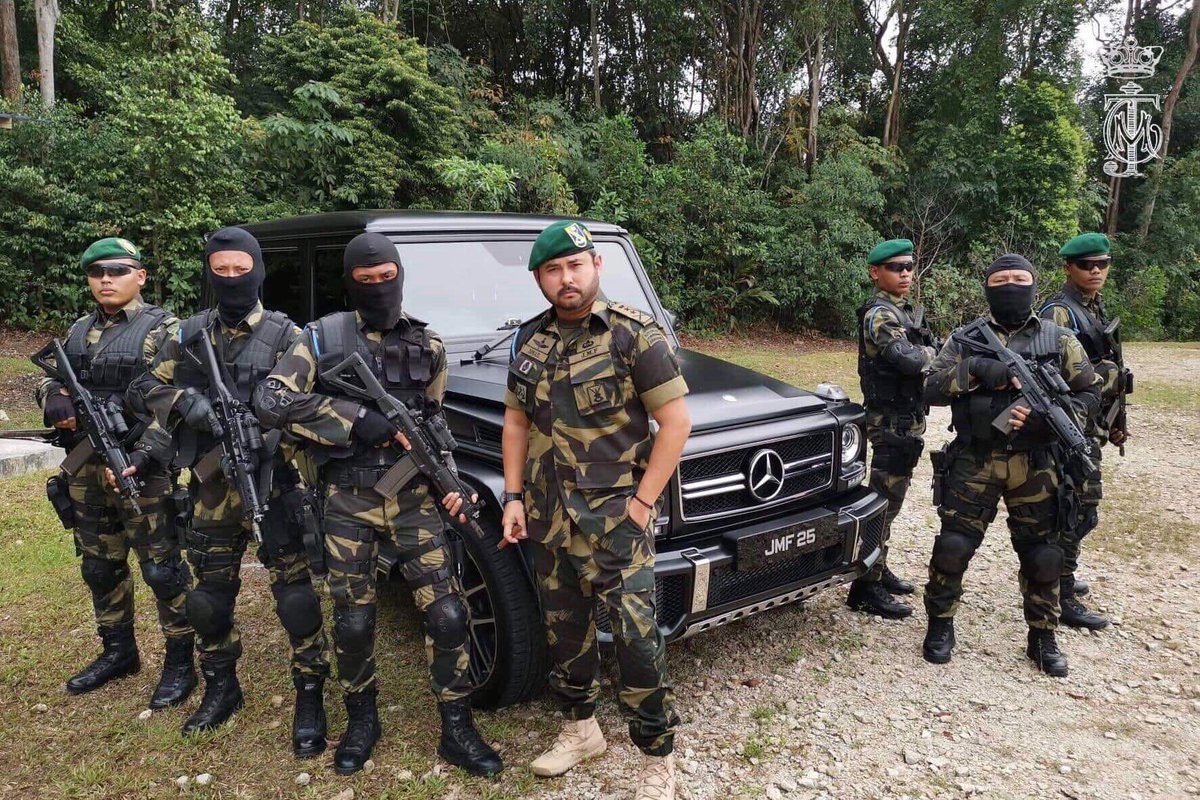
Hey guys, so we got another task to done in this particular subject which is our leader whom we admired the most. So today, I want to share with you guys about  "TUNKU ISMAIL IDRIS".


SOURCE: GOOGLE IMAGE
       

Tunku Ismail Idris Abdul Majid Abu Bakar Iskandar ibni Sultan Ibrahim Ismail is the Tunku Mahkota or Crown Prince of Johorheir apparent and first in line of succession to the throne of Johor who was born on 30 JUNE 1984.He is the eldest son of the current Sultan of Johor, Sultan Ibrahim Ismail and his consort Permaisuri of Johor, Raja Zarith Sofiah. He is the grandson of both Sultan Iskandar of Johor and Sultan Idris Shah II of Perak.

SOURCE : GOOGLE IMAGE

Tunku Ismail was appointed Raja Muda (literally means "Younger King," but taken to mean as second Heir Apparent or son of the Crown Prince) on 8 April 2006 by his grandfather, the late Sultan of Johor, and placing him second in line to the throne (Now first in line after the passing of Sultan Iskandar). Tunku Ismail was appointed as the Tunku Mahkota of Johor on 28 January 2010.

SOURCE : WIKIPEDIA

Following a family tradition of getting trained in armed forces, with his late grandfather in the Malaysian Army and father in the US Army, Tunku Ismail aspired for a career in the Indian armed forces.In July 2003, he enrolled as a cadet officer in the Indian Military Academy (IMA), India’s premier military training school located at Dehradun. He was commissioned as a lieutenant in December 2004 and absorbed into the Indian army. He was promoted to the rank of captain in December 2007.

SOURCE : GOOGLE IMAGE

The Malaysian prince is the first foreigner to lead a unit of Indian Army in the Indian Republic Day Parade.On 26 January 2007, with a rank of captain in Indian Army, he led a mounted column of Jaipur-based 61 Cavalry regiment to salute president of India Dr. A.P.J. Abdul Kalam during the Republic Day celebrations.
Image result for tmj johor in army
SOURCE : GOOGLE IMAGE

His Royal Highness the DYAM Tunku Mahkota (Crown Prince) of Johor, Tunku Ismail Idris ibni Sultan Ibrahim has been appointed as the President of Johor Football Association (PBNJ). The EGM held in Johor Bahru saw the Crown Prince appointed as the new President replacing the former, Jais Sarday. Among his plans to help bring back Johorean football to its former glory, the Crown Prince merged the Johor teams (which previously were Johor FC, MBJB and MP Muar) into only one where all of the players wear the Jengking (Scorpion) Team Jersey.

Tunku Ismail's leadership on the club Johor Darul Ta'zim F.C also oversaw its success as the first Southeast Asian club to lift the AFC Cup in 2015.
Image result for afc cup 2015
SOURCE : GOOGLE IMAGE


SOURCE : WIKIPEDIA


SOURCE : WIKIPEDIA


SOURCE : GOOGLE IMAGE


Tuesday, January 21, 2020

INTRODUCTION TO MANAGEMENT (ORGANIZING)

ORGANIZING

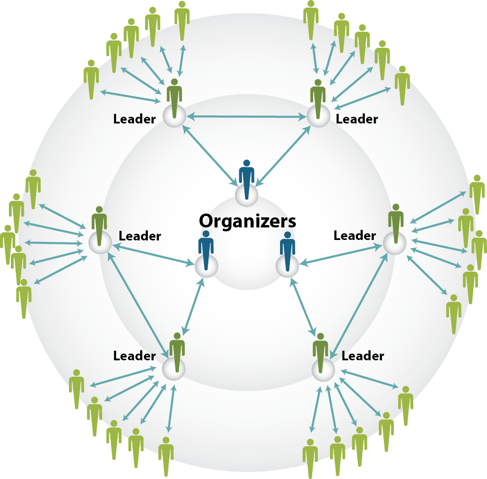
Organizing  is the establishment of effective authority relationships among selected work, persons and work places in order for the group to work together efficiently.The process of dividing work into sections and departments.The organizing of information could be seen since humans began to write. Prior to that, history was passed down only through song and word. As can be seen with religion, books and spoken word, science organizing not only is history, but also supports the communication of history.


Image result for organizing
SOURCE:GOOGLE IMAGE

PLANS FOR ORGANIZATION

  • Identifying and grouping of the work to be performed.
  • Defining and determining responsibility and authority for each job position.
  • Establishing relationship among various job positions.
  • Determining detailed rules and regulations of working for individuals and groups in organization.

Image result for ORGANIZING
SOURCE:GOOGLE IMAGE

The important factors which are to be taken into consideration in the process of designing of the organizational structure.

  • Environment – The environment is relevant for behaviour and the organization structure. The most important characteristics of environment that determine organization structure are complexity, stability , and uncertainty.
  • Technology – It enables transformation of organizational inputs into outputs and it is an important determinant of the internal efficiency of the organization. Technology includes technical equipment for manufacturing, knowledge and ability for using the equipment, and working activity necessary for the transformation process.
  • Strategy – Starting from its internal potentials, chances and threats of environment, the organization designs its strategy for the realization of the objectives. This strategy requires a certain organization structure as the frame. 
  • Size – Connection between the size of the organization and its organizational structure is very easy to notice.


elements of organizing
SOURCE:GOOGLE IMAGE

Process of organizing
Organizing, like planning, is a process which is to be carefully worked out and applied. The process of organizing consists of the following five steps:


  • Identification of activities – Each organization exists for fulfilling a specific purpose. This purpose identifies the activities which are performed by the organization. 
  • Grouping of activities – Once the activities have been identified, then there is a necessity that they are grouped. The activities are grouped in various ways. The activities which are similar in nature can be grouped as one and a separate department can be created.
  • Assignment of responsibilities – Having completed the exercise of identifying, grouping and classifying of all activities into specific jobs, the individual employees comes into picture since the employees are to be assign with the responsibilities to take care of activities related to the specific jobs.
  • Granting authority – On the basis of specific responsibilities given to individual employees, they are to be provided with the necessary authority for the discharge of the assigned responsibilities in order to ensure their effective performance of the organization.
  • Establishing relationship – This is a very important part of the organizing function since each employee in the organization is to know as to whom to report and which are the employee who are to work with him.This structure of relationships also facilitates the delegation.


Image result for process of organizing
SOURCE:GOOGLE IMAGE


ORGANIZING PRINCIPLES

  • Principle of specialization – According to the principle, the entire work of the organization is to be shared among the subordinates based on their qualifications, abilities and skills.
  • Principle of functional definition – The principle states that all the work in the organization is to be fully and clearly described to the managers and subordinates.
  • Principles of supervision or span of control – The principle states that the span of control shows the number of employees that a single manager can handle and control efficiently.
  • Principle of scalar chain – It is that chain of command or authorization in which there is minimum wastage of resources, communication is unaffected, overlapping of work is prevented, and this facilitates effective organization.
  • Principle of unity of command – As per this principle, one subordinate is accountable to only one superior at one time. This helps in preventing lack of communication and feedback and also brings about quick response.

Image result for organizing
SOURCE:GOOGLE IMAGE

ADVANTAGES OF ORGANIZING

  1. Increase In Managerial Efficiency: A good and balanced organization helps the managers to increase their efficiency
  2. Proper Utilization of Resources: Through the medium of organization optimum utilization of all the available human and material resources of an enterprise becomes possible.
  3. Sound Communication Possible: Communication is essential for taking the right decision at the right time. However, the establishment of a good communication system is possible only through an organization.
  4. Facilitates Coordination: In order to attain successfully the objectives of the organization, coordination among various activities in the organization is essential. Organization is the only medium which makes coordination possible.
  5. Increase in Specialization: Under organization the whole work is divided into different parts. Competent persons are appointed to handle all the sub-works and by handling a particular work repeatedly they become specialists.


Image result for advantages of organizing
SOURCE:GOOGLE IMAGE